
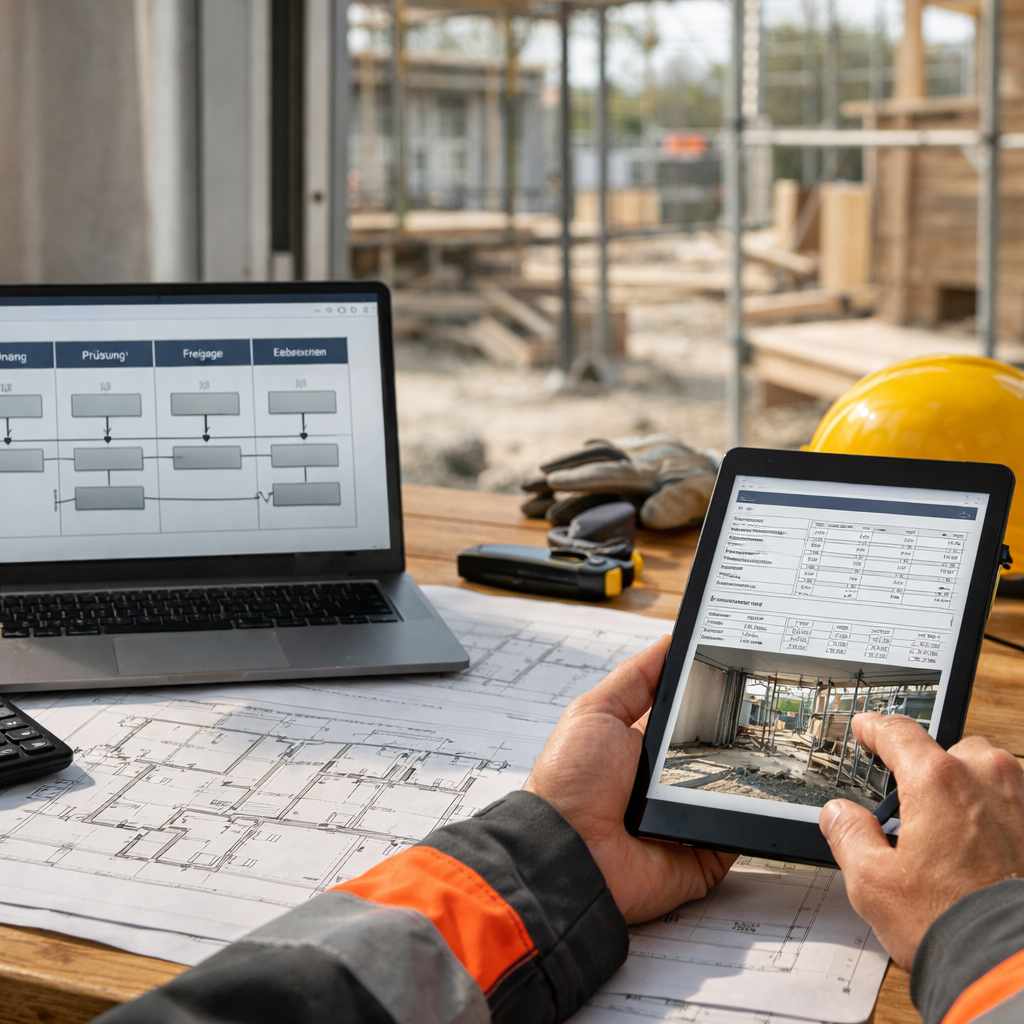
For construction and trades businesses, preparing for digital invoicing processes is becoming increasingly important. Since January 1, 2025, companies in Germany have had to be able to receive electronic invoices in the B2B sector. In day-to-day construction work in particular, it quickly becomes clear that data from the bill of quantities, measurements and invoicing must fit together cleanly.
What matters for 2026 above all is the process itself. Anyone who still maintains GAEB, measurements and invoice data separately today risks unnecessary rework, media discontinuities and errors in later invoicing.
What matters for construction and trades businesses in 2026
An e-invoice in the VAT sense is not simply a PDF. What is required is a structured electronic data set in accordance with the European standard EN 16931. In Germany, XRechnung and ZUGFeRD are particularly relevant for this.
This is especially important for the construction industry because many businesses still work with PDF invoices, Excel lists or separately maintained measurement data. These documents may be useful internally, but they do not automatically replace the required e-invoice format. Anyone adapting processes in 2026 should therefore not only think about sending an invoice, but about the complete data chain from order to invoicing.
GAEB and e-invoicing: same data basis, different tasks
GAEB files are used in construction for the standardized exchange of specifications as well as quotation, order and billing data. They are therefore a central building block