
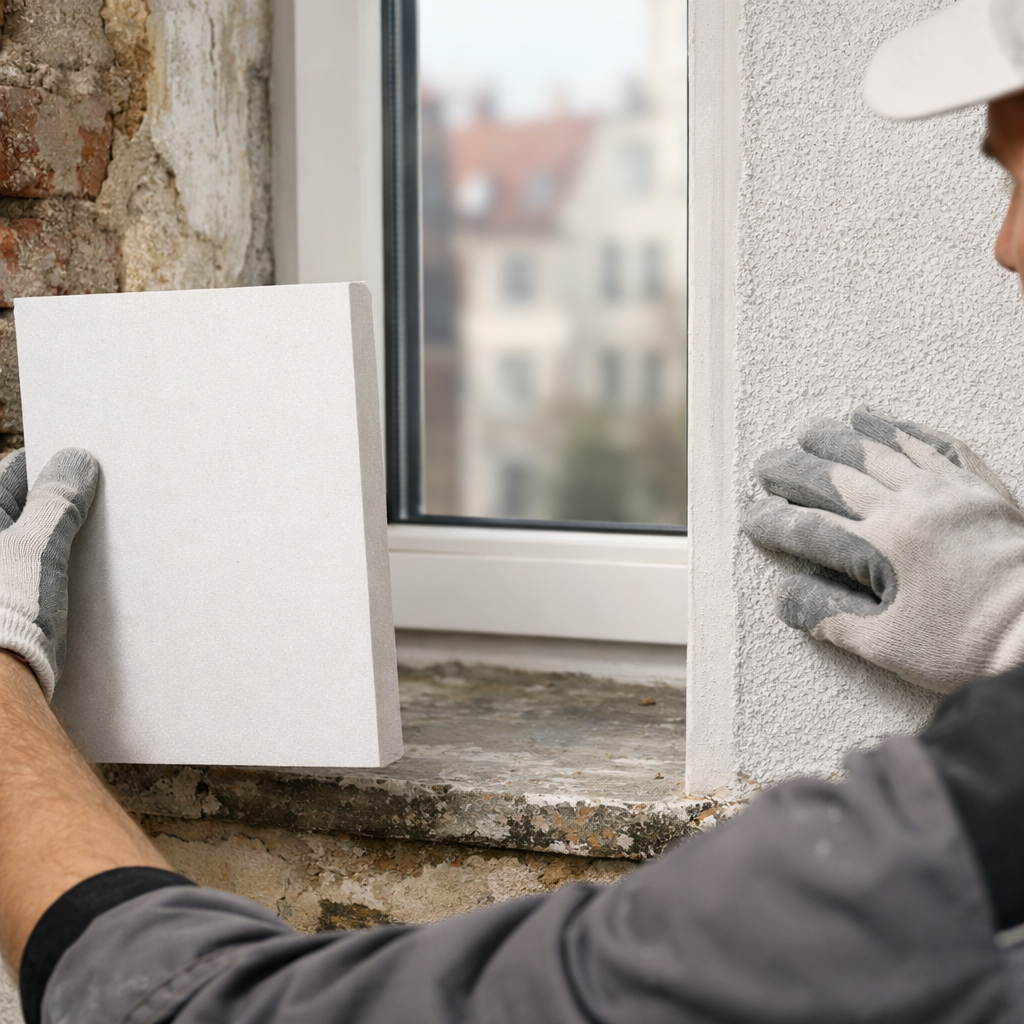
When window reveals in existing buildings become cold problem areas, internal insulation is often the only realistic solution. Especially when external insulation is not possible for reasons of heritage protection, façade constraints, or boundary conditions, the choice of the right system moves into focus. In the case of calcium silicate vs. aerogel internal insulation plaster in 2026, practice is less about a general better or worse. What matters is which boundary conditions exist at the specific reveal and how cleanly planning and connection details are resolved. Why window reveals are particularly critical in existing buildings Reveals are among the typical thermal bridge areas in existing structures. Especially around older windows, surface temperatures are often lower than on the adjacent wall surface. This increases the risk of mold with reveal insulation when moisture from the indoor air condenses at cold spots. For this reason, internal insulation of difficult details at the window reveal is not purely a matter of material choice. Anyone refurbishing a thermal bridge at a window must always consider the entire detail: wall, reveal, frame connection and, if applicable, the area to the roller shutter box. When calcium silicate boards make sense Calcium silicate boards are used in existing buildings as a capillary-active and vapor-permeable internal insulation solution. In renovation contexts, they are particularly relevant where moisture plays a special role. The material can absorb moisture from the indoor air, temporarily store it and release it again. Exactly